
ABOUT FOOD ORCHESTRATED
Food Orchestrated started with a problem I kept running into.
A recipe could tell me the temperature, the amount, and the technique. It could not always tell me why the food in front of me still needed something.
The longer I worked with food, the more I realized that the real skill was not memorizing more instructions. It was learning to recognize what was happening and knowing how to respond.
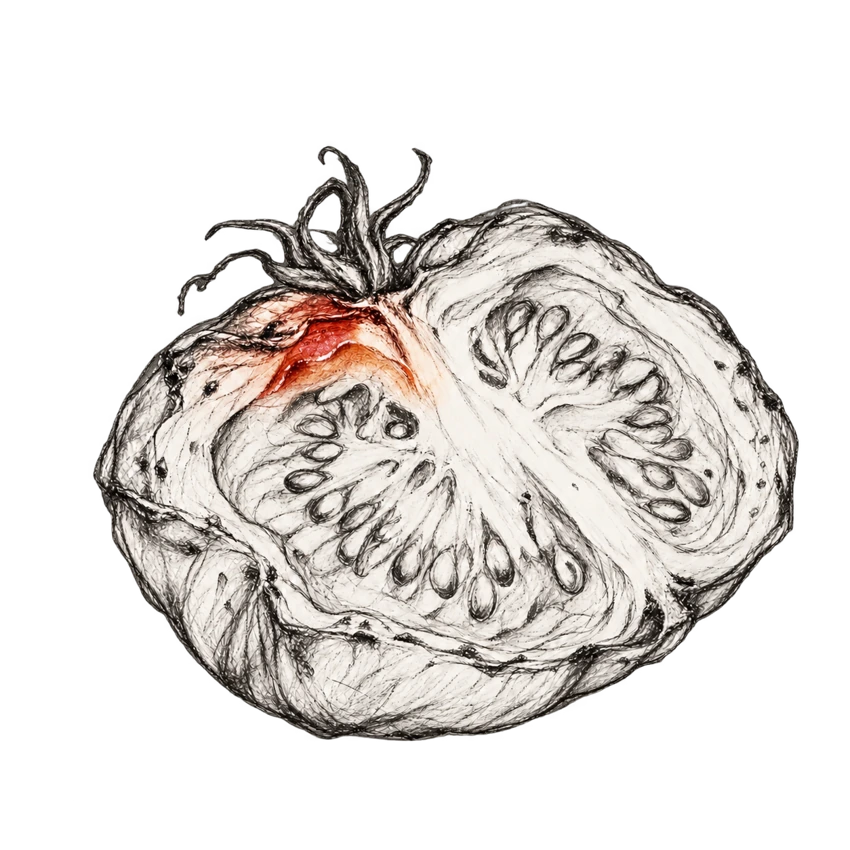
A way of looking at food.
Food Orchestrated is a practical way to understand how ingredients, aroma, palate, transformation, balance, and context work together.
It is not meant to replace technique or recipes. Those still matter. The point is to give a cook a way to think when the recipe no longer has the answer.
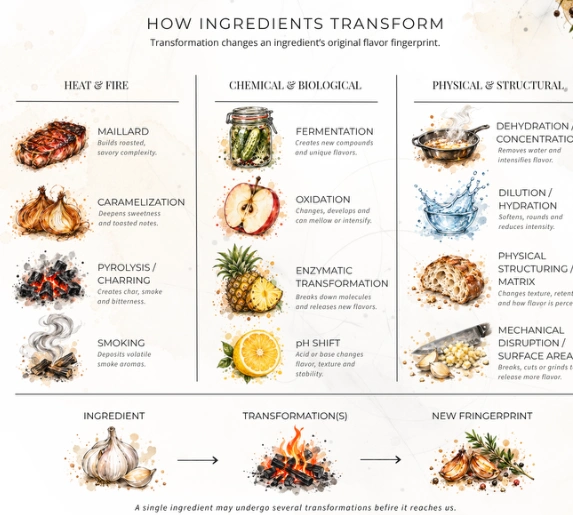
The system is built around relationships: what becomes stronger, what becomes weaker, what connects, what gets lost, and what changes when one part of a dish moves.
CREATOR OF FOOD ORCHESTRATED
I’m Theory.
My background spans professional kitchens and commercial food development. I’ve worked with food from both sides: making it in kitchens and solving problems when ingredients, process, scale, and consistency all start affecting the result.
The setting changed, but the same question kept showing up: what is actually happening in the food, and what should change next?
Food Orchestrated grew out of trying to build a clearer language for answering that question.
The same question at different scales.
At the stove
What does this food need right now?
In development
What changed when an ingredient, process, or ratio changed?
At scale
How do we preserve the intended result when ingredients, process, and consistency become more complicated?
Food Orchestrated
Can we build a clearer way to recognize those relationships and make better decisions?
The point is not that these environments are identical. They repeatedly require the same kind of thinking: observe, diagnose, change, compare, and respond.
WHY THE MUSIC LANGUAGE?
Every part does not need to be equally loud.
Rhythm, harmony, dynamics, restraint, key, and chord are metaphors for thinking about structure, emphasis, support, and balance. They help make relationships easier to see and remember.
A continuing body of work.
The Master Flavor Map
A large-format visual reference showing the relationships behind flavor.
What the Recipe Can’t Tell You
Book One: designed to change the way the reader sees and responds to food.
Learn
Free videos, experiments, and ideas that keep the thinking active.
Online Program
A guided bridge into using the Food Orchestrated system. In development.
Live Workshop
A two-day in-person experience focused on perception, diagnosis, and hands-on flavor development. In development.
Deeper books, tools, and educational material will follow as the system continues to develop.
This is a framework, not a set of commandments.
Food is contextual. Ingredients vary. People perceive things differently. Culture, memory, concentration, process, and the rest of the dish all matter.
Food Orchestrated is meant to make those variables easier to think about, not to pretend there is one correct answer for every plate.
THE GOAL IS SIMPLE.
Help people move from following food to understanding it.
If that way of thinking is useful to you, start with the Master Flavor Map and see where it takes you.
GET THE MASTER FLAVOR MAP — FREE